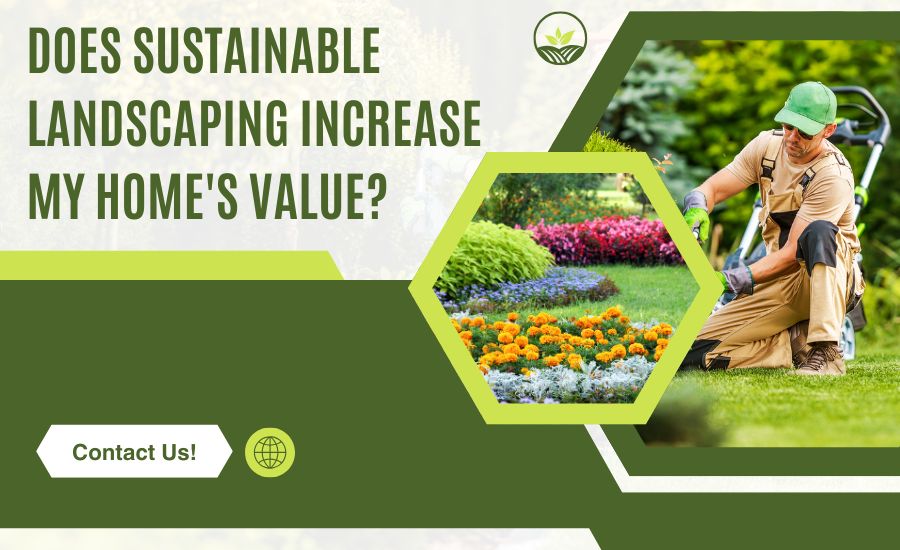
10 Helpful Sustainable Landscaping Tips to Add Value to Your Home
An environmentally friendly landscape design can afford a great many things to your property. At its core, a sustainable garden will require pesticides, minimal water use, labor, fertilizer, building materials, and maintenance. Sustainable landscaping rejects traditional design principles, including high water consumption, environmentally detrimental construction materials, and non-native or exotic plants. It is easier than you think to landscape with sustainable methods, and the plus side is that they are all eco-friendly, a rising trend in the real estate business, with beautiful gardens adding value to homes.
In this article, we will closely examine ten helpful sustainable landscaping tips that will add value to your home.
1. Do Your Research and Invest in Native Plants
Native plants are plants that grow and can be found in the region in which you live, oftentimes thriving without human intervention in your climate. They are better for the environment for a few reasons, including the following:
- Native plants are acclimated to local soil and weather conditions.
- Fertilizers won't be needed for the survival of native plants.
- Native plants are rarely invasive.
- Native plants are unlikely to rely on supplemental watering or additional irrigation.
- Native plants are naturally low maintenance.
- Native plants preserve biodiversity.
2. Construct a Rain Garden
A rain garden can make great use of rainwater and stormwater runoff, using slopes to help direct water. They conserve water to ensure an even distribution of water to all the plants. This can help ensure the thirstiest of plants are physically placed in a way that they get all the water they need. Rain gardens act as biological filters, helping to clean dirty water before it returns to rivers, lakes, or even watersheds.
3. Use Very Little Concrete
The chemical process that is involved in the making of concrete is wasteful, and to throw it away is even more so. The use of concrete in landscaping is common, seen in patios, pathways, retaining walls, and columns, but the environmental drawbacks are unknown to many. Instead, consider using more eco-friendly landscape elements.
4. Reuse and Repurpose As Much As You Can
If you are going to build with concrete, we recommend reusing whenever you can from different areas whenever possible. An old pathway can be pulled up, pressure washed, and re-installed in the form of a patio. Old slabs can be made into a pathway, and all the possibilities are endless.
5. Add a Permeable Hardscape
A permeable hardscape is an alternative to traditional concrete that filters water through the ground unimpeded. When water can seep naturally into the ground, the burden on storm drains and building infrastructure to manage rainwater decreases significantly. Permeable pavement is cheaper and easier to install, reduces the need for costly drainage systems, and is durable.
6. Rain and Catchment Basins
If the primary aim of your outdoor landscaping is to conserve water, rain barrels, and catchment basins are a must-have. Rainwater from gutters is easily collected and re-used to water your lawns and plants.
7. Green Roofs
A green roof is a rising popular feature for landscaping, considered an extensive green roof. A green roof helps manage and absorb rainwater, a perfect option for those who want to manage and absorb rainwater, an ideal option for mitigating flooding and conserving water.
8. Controlling Erosion
If the property is situated on a hill or slope, you are going to be familiar with soil erosion when nutrient topsoil is worn away by rainwater. The soil then becomes less fertile, and stormwater fills dirt particles before returning to watersheds. Wooden or concrete retaining walls can be used to halt erosion, but there are plenty of organic methods for battling erosion, like planting shrubs, trees with thick, shallow root systems, and perennials.
9. Drought-Tolerant Landscaping
Drought-tolerant landscaping in design, also known as xeriscaping, is not only for hot climates. A drought-tolerant garden or yard can simply refer to a landscape that requires very little to no water, which will involve removing plants that require water supplementation, including lawns, and replacing them with plants that will survive on their own. Other elements include the use of rocks and mulches to conserve rainwater.
10. Rock Gardens
Rock gardens are a very popular element of drought-tolerant, sustainable landscaping. This is a great option if you are hoping to make a modern, natural-looking garden that allows water to flow freely. Rock gardens can stifle weed growth and limit soil erosion.
Conclusion
Designing environmentally friendly landscaping can be a wonderful, affordable option that will add value to your home if you know all the best tips and tricks to make it so. Turn your dream garden into a low-maintenance outdoor living space that you will not only love spending time in with your family and friends but also using sustainable methods that will last for generations.
We know Colorado real estate and if you're looking to sell your home in Dolores, Cortez, or Durango, feel free to give us a call at any time for a free listing consultation!