Southwest Colorado Real Estate News & Market Trends

You’ll find our blog to be a wealth of information, covering everything from local market statistics and home values to community happenings. That’s because we care about the community and want to help you find your place in it. Please reach out if you have any questions at all. We’d love to talk with you!

July 20, 2026

Where Can You Find Homes With Workshops in Southwest Colorado?

Where Can You Find Homes With Workshops in Southwest Colorado

Best Southwest Colorado Communities for Buyers Who Want a Workshop or Large Outbuilding

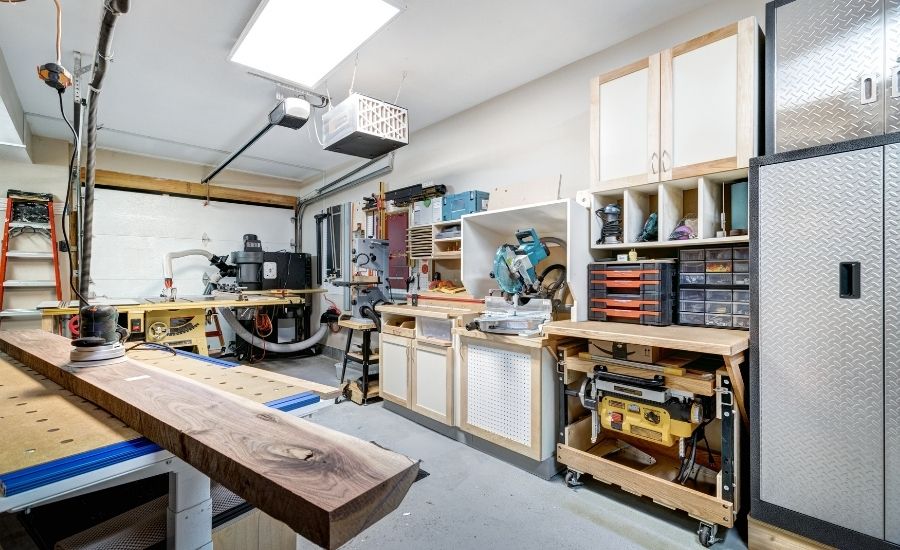
Not every buyer is searching for another bedroom; some are looking for a place to weld, build furniture, restore classic vehicles, store equipment, or finally have enough room for every hobby that's been squeezed into a garage for years. In Southwest Colorado, workshops and large outbuildings often rank just as high as kitchens or primary suites. Buyers moving to the area frequently want space that works as hard as they do.

If that's on your wish list, certain communities deserve a closer look.

More Land Usually Means More Possibilities

There's a reason buyers searching for acreage often mention a shop before they mention the house. Larger parcels create opportunities that simply aren't practical on smaller lots. Detached workshops, equipment storage, hobby barns, RV parking, and oversized garages all become much more realistic when you have room to spread out. That's one of the biggest reasons rural Southwest Colorado continues to attract buyers from across the country.

Which Communities Offer the Best Opportunity for Workshops?

Communities like Cortez, Mancos, Dolores, and Lewis are popular starting points for buyers who want additional space around their homes. Many properties in these areas include generous lots, while others already house detached shops, barns, garages, or other useful outbuildings. Every property is different, of course, but buyers searching these communities often have more opportunities to find the flexibility they're looking for.

Cortez Gives Buyers Room to Think Bigger

Cortez appeals to buyers who want convenient access to everyday amenities without giving up the possibility of owning more land. Many buyers appreciate being close to shopping, restaurants, healthcare, and schools while still finding properties that provide room for workshops and additional storage buildings. It's a balance that's becoming increasingly difficult to find in many parts of the country.

Could Mancos Be the Right Fit for Hobbyists?

Mancos has earned a reputation for attracting buyers who appreciate open space, scenic surroundings, and properties with room to grow. Whether someone enjoys woodworking, metal fabrication, mechanics, or simply wants extra storage for recreational equipment, the community frequently appeals to buyers who need more than a standard garage. Sometimes the workshop becomes the feature that sells the property.

Dolores Offers Flexibility Beyond the House

Buyers looking around Dolores often have a slightly different mindset. They're thinking about the entire property and its use for things such as trailers, equipment, future projects, and spaces that support hobbies and everyday life, rather than limiting them. That flexibility is part of what makes the area attractive to buyers looking beyond traditional subdivision living.

Where Can You Find Homes With Workshops in Southwest Colorado

Why Are Large Outbuildings Becoming More Desirable?

People simply use their properties differently today, whether it is for remote work, home businesses, recreational equipment, side projects, or year-round hobbies, all of which require space. An oversized workshop can become an office, a fabrication space, a storage building, or all three over the course of ownership. That kind of versatility attracts buyers because their needs can change without requiring another move.


"I've worked with many buyers who care less about adding another bedroom and more about finding a property with a quality workshop or enough land to build one later. Southwest Colorado offers opportunities that can be difficult to find elsewhere, especially for buyers who value flexibility, hobbies, equipment storage, or home-based work."–Bill Stanley, Broker Owner 


Ignacio Continues to Appeal to Buyers Wanting More Freedom

Some buyers aren't looking for a neighborhood packed closely together. They want breathing room. Ignacio continues attracting buyers who appreciate larger properties, quieter surroundings, and the flexibility that often comes with rural living. For buyers whose priority is usable land alongside the home, it's a community that's worth considering.

The Workshop Sometimes Becomes the Best Room on the Property

Ask someone who's always wanted a dedicated workspace. They'll probably spend more time talking about the shop than the guest bedroom. That's because workshops aren't simply storage buildings. They're places where businesses grow, hobbies thrive, projects come to life, and weekends are spent doing what people actually enjoy. For many Southwest Colorado buyers, that's exactly what they're searching for. Contact the professionals at Blue Sky Homes and Land to help you find the best South Colorado community for a workshop today.

Still Curious?

Q: Should I buy a property with an existing workshop or plan to build one later?
A:
That depends on your timeline and goals. An existing workshop can save time and allow you to start using the space immediately, while a property with extra land may give you the flexibility to design a shop that fits your exact needs in the future.

Q: Why are workshops so popular in Southwest Colorado?
A:
Many buyers moving to the area enjoy hobbies, outdoor recreation, equipment ownership, or home-based businesses. A dedicated workshop provides space that a standard attached garage often can't accommodate.

Q: What should I look for besides the workshop itself?
A:
Pay attention to the overall property layout, accessibility, available parking, room for future expansion, and how the outbuilding fits your long-term plans. The entire property should work together, not just one structure.

Q: Are larger parcels always necessary if I want a workshop?
A:
Not always. Some properties already include well-designed outbuildings on modest acreage, while others offer additional room for future construction. The best choice depends on how you plan to use the property over the coming years.


Posted in Buyer Tips
July 15, 2026

What Property Features Add the Most Value in Southwest Colorado?

What Property Features Add the Most Value in Southwest Colorado

The Property Features That Add the Most Value in Southwest Colorado

Not every property upgrade comes from a remodel. In Southwest Colorado, buyers often place just as much value on what's outside the house just as much as what's inside it. A beautiful kitchen certainly gets attention, but many buyers searching around Cortez, Mancos, Dolores, and the surrounding areas are looking for something entirely different. They're searching for land that offers flexibility, recreation, and long-term usefulness. Some property features consistently attract more interest because they're difficult, expensive, or sometimes impossible to add later.

Here are the features buyers often consider especially valuable during their home search.

Domestic Wells Continue to Attract Buyers

Water matters, and that isn't exactly breaking news in Southwest Colorado. Properties with domestic wells often appeal to buyers who value greater independence and rural living. For many, having an established water source is an important part of purchasing country property. Wells involve permitting, drilling, and significant investment; buyers frequently see existing domestic wells as a meaningful advantage. It's one less major project waiting after closing.

Why Are Irrigation Rights Such a Big Deal?

Land becomes much more useful when it has access to water. Buyers who are interested in gardening, livestock, hay production, or maintaining productive acreage often place significant value on irrigation rights. Not every rural property includes them, which makes properties that do especially attractive for certain buyers. It's one of those features that may not grab attention in listing photos, but experienced buyers know exactly how valuable it can be.

Horse Facilities Can Save Buyers Years of Work

Horse Facilities Can Save Buyers Years of Work

Horse owners don't simply shop for houses; they're shopping for the entire property.  Existing barns, fencing, loafing sheds, corrals, riding areas, and other equestrian improvements can make a property immediately functional. Building those improvements later requires time, money, and planning. That's why buyers who already own horses often gravitate toward properties where much of the work has already been completed.

Would a Heated Shop Make the Property More Valuable?

For many buyers, heated shops have become increasingly desirable throughout Southwest Colorado. Some buyers need workspace for equipment maintenance, while others enjoy woodworking, vehicle restoration,  home businesses, or year-round hobbies that benefit from a climate-controlled workspace. A heated shop adds flexibility. It's often the kind of feature buyers didn't realize they wanted until they toured a property that already had one.

Creek Frontage Offers Something You Can't Build Later

Creek Frontage Offers Something You Can't Build Later

There are plenty of home improvements you can add over time. Creek frontage isn't one of them. Properties with natural water features often create a setting that's difficult to duplicate. Buyers appreciate the scenery, the sound of moving water, and the character these properties can provide. Because creek frontage is naturally limited, it often draws strong interest whenever it becomes available. Some things simply can't be replicated with a renovation budget.

Why Does National Forest Adjacency Get So Much Attention?

Imagine stepping outside your back gate and having direct access to thousands of acres of public land. This is the appeal. Properties bordering the National Forest often attract buyers who enjoy hiking, horseback riding, hunting, wildlife viewing, and exploring the outdoors without needing to load up the truck every weekend. The added privacy and open space are equally attractive. For outdoor enthusiasts, this feature often sits near the very top of the wish list.


"Some of the most valuable property features in Southwest Colorado have very little to do with the house itself. Buyers consistently recognize the long-term value of water resources, usable land, equestrian improvements, heated shops, and access to the outdoors because those are features that are often difficult or impossible to recreate after purchasing the property."–Bill Stanley, Broker/Owner


Solar-Ready Properties Appeal to Forward-Thinking Buyers

Many buyers are thinking further ahead than they did a decade ago. Properties with good solar exposure, suitable roof orientation, or open land that supports future solar installations often receive additional attention. Some buyers plan to install solar shortly after moving in, while others simply appreciate knowing the property offers that flexibility down the road. Preparation itself can become a selling point.

Which Features Hold Their Value Best Over Time?

The features buyers consistently value tend to share something in common. They're difficult to create after the fact. You can remodel kitchens, repaint walls, replace flooring, but it is much harder to add creek frontage, secure irrigation rights, border National Forest, or suddenly create usable horse facilities. Those unique characteristics help certain Southwest Colorado properties stand apart in ways that renovations simply can't match. Reach out to the professionals at United Country Real Estate if you are ready to find the best Southwest Colorado property with these features to check off your list today.

Still Curious?

Q: Why do buyers value irrigation rights so highly?
A:
Irrigation rights can make land much more useful for agriculture, livestock, gardens, and other rural uses, making them an attractive feature for many buyers.

Q: Are heated shops only useful for hobbyists?
A:
No. Buyers use heated shops for equipment and vehicle storage. Maintenance, home businesses, woodworking, and many other year-round activities.

Q: Does National Forest adjacency increase buyer interest?
A:
For many outdoor enthusiasts, yes. Direct access to public land is a feature that's difficult to duplicate and often becomes a major selling point.

Q: What property feature is hardest to add after buying?
A:
Natural characteristics like creek frontage, established water resources, and National Forest adjacency are generally impossible to create later, which is why buyers often place such a high value on them.

Posted in Seller Tips
July 6, 2026

What Do Buyers Looking in Southwest Colorado Regret Not Buying?

What Do Buyers Looking in Southwest Colorado Regret Not Buying

What Southwest Colorado Buyers Regret NOT Buying

It isn't uncommon for buyers to worry about paying too much. It's an understandable concern, and nobody wants to overpay for a property. What's interesting is what happens a few years later. Most homeowners in Southwest Colorado aren't going to be talking about the extra few thousand dollars they spent on their property; instead, they're talking about the features they wish they'd stretched for when they had the chance. It is no secret that after living in this area for a while, there is a shift in priorities: the property that looked perfect on paper starts to reveal its little limitations. A garage can feel too small, the view isn't quite what they hoped for, or the extra acre suddenly doesn't seem so unnecessary.

In this article, we will discover some of the things buyers in the Cortez, Mancos, Dolores, and surrounding Southwest Colorado communities most often wish they had purchased from the start to help future buyers avoid the same mistakes.

Should More Acreage Be Purchased?

Many buyers move to Southwest Colorado because they are looking for space from the hub and buzz of the city. Then they get focused on the house itself and settle for less land than they originally planned. Fast-forward a year later, and they're wishing they had more room. Maybe it's for a garden, maybe it's for animals, or maybe it's simply because they discovered they enjoy having a buffer between themselves and neighboring properties.

Land always has a funny way of becoming more valuable after you've lived with it. People rarely complain about having too much room, and the opposite happens here all the time.

Better Mountain Views Add More Than Just Scenery

Mountain views have a tendency to feel like a luxury item during a home search. Then, you spend your first summer watching sunsets from the porch and suddenly that view becomes part of your daily life. Southwest Colorado offers incredible scenery, and buyers who choose a property without the views they wanted find themselves looking longingly at later listings.

The funny thing is that mountain views don't just affect resale value or curb appeal; they change how a property feels entirely. Morning coffee hits differently when you are looking at distant peaks instead of a fence or city line.

Is Workshop Space Discarded?

Those who are making the move to this area tend to have hobbies, whether that is building things, fixing things, restoring vehicles, working on outdoor gear, or tinkering with equipment. Some eventually even start a side business. What starts as a simple need for storage turns into a need for a real workspace. Many homeowners discover that a garage corner isn't enough.

Before long, they're pricing detached shops, metal buildings, or additions that would have been easier and less expensive if the property had included the space from the get-go. It's amazing how quickly a workshop fills up once you finally have one.

Water Rights Are More Valuable Than Buyers Realize

The house, the views, and the acreage get the attention. Then, usually, when water rights move from a line item on paperwork to something that matters every day. Properties with water resources provide ample opportunities that buyers don't fully appreciate until they have been living on the land for a while.  By then, finding similar land can be much more challenging.


"One thing I see repeatedly is buyers focusing heavily on the house itself while underestimating how much the land and property features will matter later. The home can often be updated over time. It's much harder to add acreage, improve a mountain view, secure water rights, or create space where none exists. The buyers who are happiest years down the road usually chose a property that gave them room to grow into the Southwest Colorado lifestyle they wanted."–Bill Stanley, Broker/Owner


Could a Larger Garage Be Utilized Better?

Having a larger garage space and using it is often ideal in this area, as Southwest Colorado lifestyles tend to involve equipment. From things like trucks, ATVs, side-by-sides, and campers to snow gear, hunting gear, tools, and bicycles, the list goes on and on. A two-car garage can feel spacious during a showing. it can also feel surprisingly crowded six months after move-in.

Homeowners often discover they aren't really storing vehicles; they're storing a lifestyle. That extra bay, deeper garage, or oversized door that seemed unnecessary during the search suddenly starts looking like a brilliant investment.

Guest House Potential Matters More Than Expected

Few buyers move to Southwest Colorado expecting guests to visit constantly. Then the family starts coming out to see the mountains, friends want a long weekend, adult children come back for the holidays, and grandchildren show up during summer breaks. Before long, spare bedrooms are working overtime.

Properties with room for a guest house, accessory dwelling, detached casita, or future expansion often offer flexibility that becomes more valuable over time. Even buyers who don't have immediate plans sometimes wish they had preserved that option.

What Do The Happiest Buyers Have in Common?

The happiest buyers usually bought for the life they hoped to have, not just the life they had at the moment they signed the contract. That's a subtle difference, but it matters. The buyers who seem happiest years later often gave themselves a little extra room, extra land, extra storage, extra views, and extra flexibility.

Nobody can predict exactly how they'll use a property five years from now. Still, the features people regret not buying tend to be remarkably consistent: more space, better scenery, and more options.  Southwest Colorado has a way of encouraging people to spread out, spend more time outdoors, pick up new hobbies, and invite family to visit. The right property makes all of that easier. If you are interested in purchasing the ideal Southwest Colorado property with all these features, reach out to the team at United Country Real Estate today.

Posted in Buyer Tips
June 22, 2026

Should You Rent or Sell Your Newly Renovated Home?

Should You Rent or Sell Your Newly Renovated Home

Should You Rent or Sell Your Newly Renovated Home? How to Make the Right Choice

For prospective property owners who just finished a newly-remodeled fixer-upper, the next move can feel surprisingly murky. The rent vs sell decision isn’t only about pride in the updates; it’s a property investment choice tied to home renovation value, ongoing responsibility, and how much uncertainty feels tolerable. Selling can turn the renovation into a clean win, while renting can stretch that value over time, but each option carries real tradeoffs that show up in money, time, and stress. Clear real estate decision factors make the choice feel less emotional and more grounded.

Rent vs Sell: A Quick Decision Framework

This table compares common paths homeowners take after renovating, so you can match the decision to your cash flow needs, time, and tolerance for ongoing work. It also highlights where taxes and renovation returns can change the math, since rental income and sale proceeds are treated differently and tax rules can be progressive as different portions of your income get taxed at different rates.


Option

Benefit

Best For

Consideration

Sell now (standard listing)

Locks in equity and simplifies life fast

Relocation, debt payoff, low time bandwidth

Agent fees, prep costs, and market timing risk

Rent long term (12+ months)

Steadier income stream and potential appreciation

Patience, stable local demand, long horizon

Repairs, vacancies, and landlord compliance workload

Rent then sell later

Earn income while waiting for better pricing

Unsure plans, seasonal markets, rate shifts

Two sets of costs, wear and tear may reduce appeal

Sell with renovation ROI lens

Highlights upgrades to justify pricing

Recent high-impact updates, strong comps

Some upgrades do not pay back dollar-for-dollar


If you want the cleanest exit, selling now usually wins on simplicity. If you want to keep the asset working for you, renting can pay off, but only if you are ready for the ongoing operational role. Picking the option that matches your bandwidth makes the next step feel lighter.

Make Your Rental Look Legit With Simple, Consistent Branding

Once you’ve weighed the rent-vs-sell tradeoffs, the next win is making sure a “for rent” listing feels as polished and trustworthy as the renovation itself. If you decide to become a landlord, you’re essentially starting a small business, and your marketing is often the first handshake. A simple, well-designed logo can make a strong first impression and help your rental look legitimate, even if it’s just one property. The key is consistency: pick a look you like, then carry it across your photos, any signage, and the little graphics you might add to a listing so everything feels cohesive.

And you don’t need a big budget to pull this off. Instead of paying for professional logo design services, you can create something clean and appealing on your own by using a logo maker. Choose a style and an icon, add the text you’ll need, then browse the logo options you get, tweaking fonts and colors until it matches the vibe of your newly renovated space. With your visuals looking consistent, you’ll be ready to shift from “pretty listing” to practical landlord prep, starting with the key moves to make before your first tenant.

If You Rent It Out: 7 Practical Moves Before Your First Tenant

Renting out a newly renovated home can be a great move, but only if you shift from “proud owner” mode to “repeatable systems” mode. These steps help you protect your time, your property, and the calm, trustworthy vibe you built with your branding.

  1. Finish rental-ready improvements (not just pretty ones): Walk the home like a tenant who will live there every day: durable flooring, easy-clean paint in a consistent color, sturdy window coverings, and bright lighting in kitchens/entries. Fix “little” things that become big maintenance calls, sticky doors, loose handrails, slow drains, wobbly toilets. If your branding section helped you pick a look, carry it into upgrades (matching hardware finishes, the same bulb color temperature) so photos and showings feel cohesive.
  2. Create a maintenance plan you can actually follow: Write a one-page schedule: monthly filter changes, quarterly pest checks, seasonal HVAC service, and annual gutter/roof scans. Then build a mini “home file” with appliance manuals, paint colors, shutoff valve locations, and contractor contacts, future-you will thank you. Decide how tenants should submit issues (email/text/portal) and set a response standard like “urgent within 2 hours, non-urgent within 48.”
  3. Set your screening process before you post the listing: Define your criteria in writing first (income multiple, credit range, rental history, occupancy limits, pet policy) so you don’t make emotional, inconsistent decisions. A smart time-saver is doing a quick pre-screen call or message exchange to confirm basics; some landlords find five minutes of prescreening can cut total showings by 30 to 50%, which means fewer no-fit appointments and less disruption. Keep everything fair and consistent: same questions, same standards, every applicant.
  4. Handle landlord legal obligations early (so you don’t scramble later): Look up your city/state rules on security deposit limits, required disclosures, smoke/CO detector standards, and habitability requirements. Plan for the unsexy-but-important admin: where deposits are held, how receipts are provided, and what your notice periods are for entry and non-renewal. If anything feels fuzzy, a short consultation with a local pro is often cheaper than a mistake.
  5. Advertise like a “tiny brand,” not a random listing: Reuse your consistent colors/fonts from your branding work on a simple one-page info sheet and in your listing images (think: a clean feature list and a “how to apply” slide). Take photos in daylight, shoot from the same corners in each room, and include 1–2 lifestyle details that match your brand vibe, like a tidy coffee nook or a crisp, labeled storage area. Add practical clarity that attracts better-fit tenants: parking, laundry, pet rules, utilities, and move-in costs.
  6. Use a tight rental agreement, and make it easy to follow: Your lease should spell out rent due date/fees, maintenance responsibilities, yard care, guest limits, subletting rules, and exactly how repairs are requested. Attach a move-in checklist and require photos at move-in and move-out; it reduces “he said/she said” later. If you allow pets, add a pet addendum with fees, weight/breed rules if applicable, and damage expectations.
  7. Reduce risk with simple boundaries and the right coverage habits: Require a move-in walk-through, verify smoke/CO detectors, and document everything before handing over keys. Consider asking tenants to carry their own coverage. Many landlords encourage tenants to maintain renters insurance, so a tenant’s personal belongings aren’t your problem when the unexpected happens. Finally, decide now whether you’ll self-manage or hire help, because your systems (and your stress level) will look different either way.

Rent or Sell? Quick Answers to Common Concerns

Q: What legal basics do I need before renting it out?
A: Start with your local landlord-tenant rules, then get a state-compliant lease and required disclosures in writing. Confirm security-deposit handling, notice requirements for entry, and habitability standards before anyone moves in. If you feel uncertain, a short consultation with a local attorney or property manager can save you expensive missteps.

Q: What kind of insurance do I need as a landlord?
A: A standard homeowner policy usually is not enough once you have tenants. Ask your insurer about landlord or dwelling coverage, liability limits, and loss-of-rent protection. Also require tenants to carry renters insurance so their belongings are covered.

Q: Are there tax benefits to renting after renovating?
A: Rental income is taxable, but many owners can deduct ordinary operating costs and may depreciate the property. Keep a simple spreadsheet and save receipts from day one, especially for repairs versus improvements. A tax pro can help you avoid mixing personal-use rules with rental rules.

Q: Should I hire a property management company or self-manage?
A: Self-managing can work if you have time for showings, late-night calls, and vendor coordination. If you want more predictability, a manager can protect your time and improve consistency, which ties into the idea of property management return on investment. Interview two or three companies and compare fees, leasing terms, and communication standards.

Q: How does the home-selling process work at a high level?
A: You will typically price the home, prep it for photos and showings, negotiate an offer, then move through inspection, appraisal, and closing. The core selling process is really a set of repeatable steps, so ask your agent to map out a timeline and decision points upfront. That clarity makes the whole thing feel far less overwhelming.

Decide Whether to Rent or Sell With Confidence


Renovating is exciting, now comes the hard part: deciding whether to rent for steady income or sell for a clean break and cash out. The best move comes from making informed property decisions, weighing real estate options through the lens of goals, risk tolerance, and the time available to manage the home. With that mindset, maximizing property investment feels less like guesswork and more like a clear choice, whether that means support for new landlords or smart exit strategies for homeowners. Choose the option that fits your life now, not the one that sounds best on paper. If you have more questions on your Southwest Colorado home or property, give us a call at any time!

Posted in Homeowner
June 17, 2026

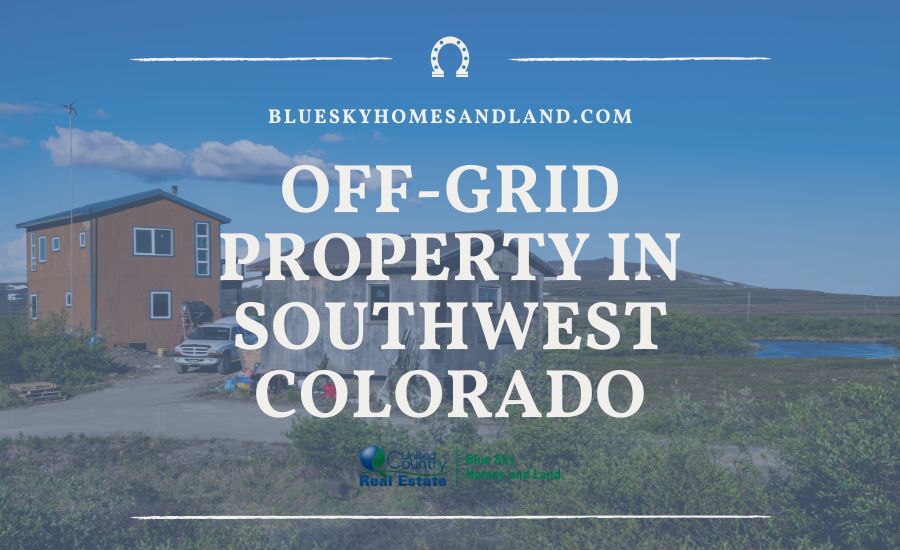
Off-Grid Property in Southwest Colorado

Off-Grid Property in Southwest Colorado

What Should You Check Before Buying an Off-Grid Hobby Ranch in Southwest Colorado?

The idea of picking up and relocating to Southwest Colorado and buying an off-grid hobby ranch sounds simple enough. What's a few acres and some lovely mountain views? There's room for animals, gardens, equipment, and maybe a little distance from the noise of town. Then reality sets in.

Off-grid land and hobby ranch properties can offer incredible opportunities in Southwest Colorado, but they also come with questions many buyers never think to ask until after closing. Water, access, power, zoning, and seasonal conditions can have just as much impact on your experience as the house itself. That's why buyers who are serious about Colorado acreage often spend more time evaluating the land than the home sitting on it.

If you're considering off-grid land in Colorado or searching for a hobby ranch in Southwest Colorado, here's what deserves a closer look before making an offer.

Start With Water Before Anything Else

Many first-time acreage buyers focus on views, fences, barns, and square footage. Experienced land buyers usually start with water. Water availability affects nearly everything you'll do on the property. Livestock, gardens, household use, and long-term property value all depend on having a reliable source.

A well can be a tremendous asset, but buyers should understand its production, condition, and history. Properties may also have water rights, irrigation rights, cistern systems, or other arrangements that influence how the land can be used. It's not the most exciting part of a property tour, but it may be the most important.

How Does the Property Get Power?

Not every rural property operates the same way. Some off-grid properties rely entirely on solar systems, while others combine solar power with backup generators. Some acreage parcels may have access to traditional utility service nearby, while others are completely independent. Before buying, understand exactly how the property functions day to day.

Ask questions about system capacity, backup power sources, maintenance requirements, and how the property performs during different seasons. Southwest Colorado enjoys abundant sunshine, which makes solar a popular option, but every setup is different. The goal isn't simply finding power; it's understanding whether the existing system supports the lifestyle you want.

Road Access Matters More Than Most Buyers ExpectOff-Grid Property in Southwest Colorado

A property may feel wonderfully secluded during a sunny summer afternoon. January will tell a different story. Come winter, access roads, maintenance responsibilities, easements, and seasonal conditions deserve careful attention during the buying process. Some rural roads are maintained publicly, while others may be maintained privately by neighboring property owners or homeowner associations. Even buyers who love privacy often discover they want reliable year-round access. That becomes especially important for deliveries, emergency services, livestock care, and daily commuting.

Does the Land Fit Your Plans?

"Hobby ranch" can mean very different things to different buyers. One person wants horses, another might want a greenhouse and chickens. The land needs to support those goals. Topography, soil conditions, fencing, existing infrastructure, and usable acreage all influence what the property can realistically accommodate. A beautiful parcel may not necessarily be the best fit for every intended use. Walking the land often reveals things that listing photos never can.

Look Beyond the House

Traditional homebuyers often focus heavily on kitchens, bathrooms, and finishes. Acreage buyers tend to evaluate an entirely different set of features. Barns, workshops, equipment storage, fencing, loafing sheds, corrals, water access points, and outbuildings can have a significant impact on how a property functions over time. Sometimes the most valuable part of a hobby ranch isn't the house at all, but the infrastructure that's already in place.

Know What Local Regulations Allow For

Not every parcel offers the same type of flexibility. Things like zoning, land-use regulations, building requirements, and property-specific restrictions can influence future plans. Buyers considering livestock, agricultural activities, additional structures, or long-term improvements should understand what is permitted before purchasing. This step is easy to overlook when emotions take over during a property search. Unfortunately, it's also where many acreage buyers encounter surprises after closing.


"The biggest mistake acreage buyers make is focusing too much on the house and not enough on the land. The house can often be updated over time. Water access, usable acreage, road conditions, solar systems, and property infrastructure are much harder to change. The buyers who ask detailed questions about how the property actually functions tend to be the happiest a few years down the road."–Bill Stanley, Broker/Owner 


Should I Consider Distance and Its Effects on Accessibility Differently?

People moving from suburban neighborhoods sometimes underestimate how differently distance works in rural Colorado. A grocery run may take longer, and veterinary services may be farther away. Feed stores, hardware stores, and other necessities might require more planning than they would in a traditional residential neighborhood. Most acreage owners consider those trade-offs worthwhile.

Still, it's smart to evaluate how the property's location fits your daily routines before making a commitment. Living on rural land often means thinking ahead a little more often.

Pay Attention to the Seasons

Southwest Colorado offers incredible scenery throughout the year, but seasons can affect how a property functions. Snow accumulation, wind exposure,  drainage patterns, and seasonal access can all influence day-to-day life.

A property that feels perfect during one season may reveal entirely different characteristics during another. Local knowledge becomes especially valuable here because long-time residents often understand challenges and advantages that don't show up in listing photos.

Ready to Find Out Why Southwest Colorado Continues to Attract Acreage Buyers?

There's a reason buyers continue searching for hobby ranches and off-grid land throughout Southwest Colorado. People are looking for space, they want flexibility, and they want room for animals, projects, gardens, workshops, and a lifestyle that's increasingly difficult to find in more densely populated areas.

The right property can provide all of that. Finding the right property, though, usually comes down to asking better questions before you buy. The views may grab your attention first. The practical details are what determine whether you'll love the property ten years from now. If you are ready to invest in living off-grid in Southwest Colorado, contact your local professionals at United Country Real Estate to guide you in your venture today.

Frequently asked questions about buying an off-grid hobby ranch in Southwest Colorado

What should I check first before buying an off-grid hobby ranch?

Start with water. Before focusing on the house, views, barns, or fencing, buyers should understand the property's water source, well production, water rights, irrigation rights, cistern setup, and how water can legally and practically be used on the land.

Why is water so important when buying rural acreage in Colorado?

Water affects household use, livestock, gardens, long-term usability, and property value. A property may look like a good fit on the surface, but limited water access or unclear water rights can change what the land can actually support.

How do off-grid ranch properties usually get power?

Some off-grid properties rely on solar power, while others use solar with a backup generator. Some may have utility service nearby, and others are fully independent. Buyers should ask about system capacity, backup power, maintenance, and how the setup performs during different seasons.

What should I know about road access before buying rural land?

Road access can look simple during good weather and become more complicated in winter. Buyers should confirm whether the road is public or private, who maintains it, what easements apply, and whether the property has reliable year-round access for daily use, deliveries, emergency services, and livestock care.

Can I keep animals on any hobby ranch property?

Not always. Buyers should review zoning, land-use rules, property restrictions, fencing, water access, usable acreage, and existing infrastructure before assuming the land will support horses, chickens, livestock, or other animals.

What property features matter most besides the house?

On a hobby ranch, outbuildings and land infrastructure can matter as much as the home. Buyers should review barns, workshops, equipment storage, fencing, corrals, loafing sheds, water access points, and how well the land is set up for the intended use.

Why should buyers pay attention to the seasons?

Seasonal conditions can affect access, drainage, wind exposure, snow accumulation, power needs, and day-to-day property use. A property that feels easy to manage in summer may function very differently in winter or during wet weather.

Is the distance from town a big deal with off-grid acreage?

It can be. Buyers should think through grocery trips, feed and hardware runs, veterinary services, medical access, commuting, deliveries, and emergency response. Many acreage owners are comfortable with the extra planning, but it should be part of the decision before making an offer.

June 8, 2026

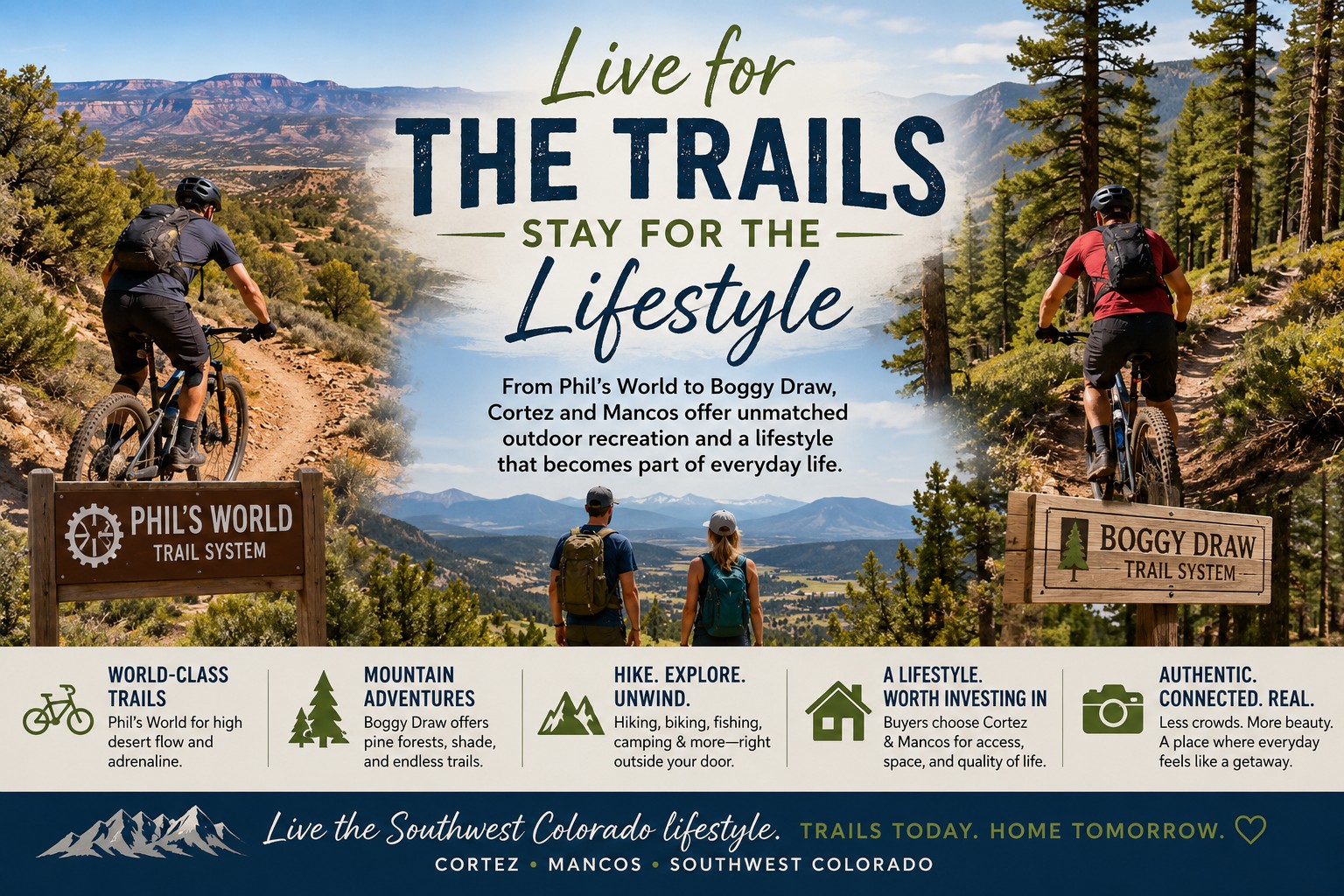
Phil's World, Boggy Draw & Outdoor Recreation Near Cortez, Colorado

Phil's World, Boggy Draw & Outdoor Recreation Near Cortez, Colorado

A lot of people move to Southwest Colorado, thinking the mountains will become the main attraction.  Then they spend one weekend riding Phil's World or hiking through Boggy Draw, and suddenly the conversation changes completely. Outdoor recreation around Cortez and Mancos is not just something residents do occasionally; It becomes part of normal life here pretty fast.

Morning trail rides before work, quick evening hikes, weekends that accidentally turn into all-day adventures because somebody said, "Let's just do one more loop." That outdoor lifestyle is a huge reason buyers keep relocating to this part of Colorado. Especially people leaving crowded cities where access to recreation usually involves traffic, reservations, or fighting for parking before sunrise.

Continue to read to find out what living near these wonderful attractions means for you as a resident of Southwest Colorado's stunning communities.

Why Phil's World Became a Mountain Biking Destination

Phil's World Trail System has become one of the better-known mountain biking systems in Southwest Colorado for good reason. The trails are approachable enough for newer riders while still staying fun for experienced bikers who want speed, flow, and technical sections mixed together. And honestly, the scenery does a lot of heavy lifting, too. Riders move through rolling desert terrain with huge views stretching toward the mountains while the trail system twists through juniper, sagebrush, and high desert landscape that feels very different from stereotypical alpine Colorado riding. That contrast sometimes surprises visitors. A lot of buyers relocating here end up loving the diversity of recreation available throughout the Four Corners region because people are not limited to just one type of outdoor environment.

Why Boggy Draw Feels Completely Different

Boggy Draw Trail System offers a totally different experience compared to Phil's World. More forest, cooler temperatures, higher elevation, and thicker pine coverage are what Boggy Draw is all about. The trail network near Mancos attracts mountain bikers, hikers, trail runners, and campers looking for longer rides and more shaded terrain throughout warmer months. And honestly, a lot of residents use both systems regularly because they complement each other so well. One day, you're riding high desert slick terrain near Cortez.

The next time you're climbing through a pine forest outside Mancos. That recreation variety becomes a huge lifestyle advantage for people living here full-time.

Why Does Outdoor Recreation Matter So Much to Local Real Estate?

Buyers increasingly shop for lifestyle first now. Especially relocation buyers. People moving into Cortez, Mancos, and the surrounding Southwest Colorado areas are often intentionally leaving behind busier lifestyles because they want easier access to outdoor living.

Properties near trail systems, mountain access, public land, and recreation corridors tend to attract strong attention because buyers view those amenities as part of the daily quality of life. That's especially true around areas near Mancos, where buyers often prioritize scenery, trail access, acreage, and outdoor recreation over proximity to heavy commercial development. The lifestyle itself becomes part of the real estate value equation.


"A lot of buyers relocating to Southwest Colorado are prioritizing outdoor access just as much as the house itself now. People want to live somewhere they can realistically mountain bike, hike, fish, or explore public land without turning it into a major weekend production every time. Areas near Phil's World, Boggy Draw, and Mancos continue attracting buyers because the lifestyle feels authentic and connected to the outdoors in a way larger recreation markets have started losing." –Bill Stanley, Broker/Owner 


Hiking Near Mancos Feels Different Than Resort Colorado

Southwest Colorado still feels less commercialized than some larger mountain markets. That changes the outdoor experience significantly. Trails near Mancos and Cortez often feel quieter, less crowded, and more locally driven compared to heavily tourist-centered recreation areas elsewhere in Colorado. People who move here usually appreciate that pretty quickly. Nearby hiking opportunities range from forested mountain trails near Boggy Draw to high desert exploration throughout the broader Four Corners region.

Residents also stay relatively close to places like Mesa Verde National Park, which adds another layer of outdoor and historical access to everyday life. And honestly, having world-class hiking and biking within normal driving distance stops feeling unusual surprisingly fast once people settle here.

Why Buyers Leaving Cities Gravitate Toward Cortez and Mancos

Space, quiet, and outdoor access without constant crowds are huge draws for many. Buyers relocating from larger cities often want homes where they can walk outside and immediately access trails, public land, mountain views, or open space without spending two hours fighting traffic first.

Cortez and Mancos offer versions of that lifestyle that still feel relatively attainable compared to some Colorado resort towns where prices climbed far beyond what many buyers can realistically justify. People can actually build everyday routines around outdoor recreation here instead of treating it like an occasional vacation activity.

What Do Outdoor Buyers Usually Prioritize in Real Estate?

Interestingly, it's not always giant luxury homes. A lot of recreation-focused buyers care more about usable garages, gear storage, acreage, trail access, privacy, workshop space, RV parking, and proximity to public land than flashy finishes.

They want homes that support how they actually live. This is partly why rural and semi-rural properties around Cortez and Mancos continue attracting attention from outdoor-oriented buyers. People want room for bikes, trailers, campers, kayaks, side-by-sides, and all the other equipment that outdoor hobbies somehow multiply into over time. And honestly, mountain town garages become weirdly emotional topics once someone owns four bikes and has nowhere to store them.

Why Southwest Colorado Outdoor Living Keeps Pulling Buyers In

Because the lifestyle still feels authentic. People move here because they want access to trails, forests, mountains, desert terrain, camping, biking, hiking, fishing, and public land without feeling packed into heavily commercialized recreation markets. Phil's World and Boggy Draw are just part of that larger picture. The real attraction is that outdoor recreation becomes woven directly into normal daily life around Cortez and Mancos. And once buyers experience that rhythm for a while, a surprising number of them realize they're not really looking for vacation living anymore. They're looking for a place where everyday life actually feels better outside.

Trust the real estate professionals at United Country Real Estate to guide you in finding and settling down in the home of your dreams in the many beautiful, well-maintained lots in Southwest Colorado communities today.

June 1, 2026

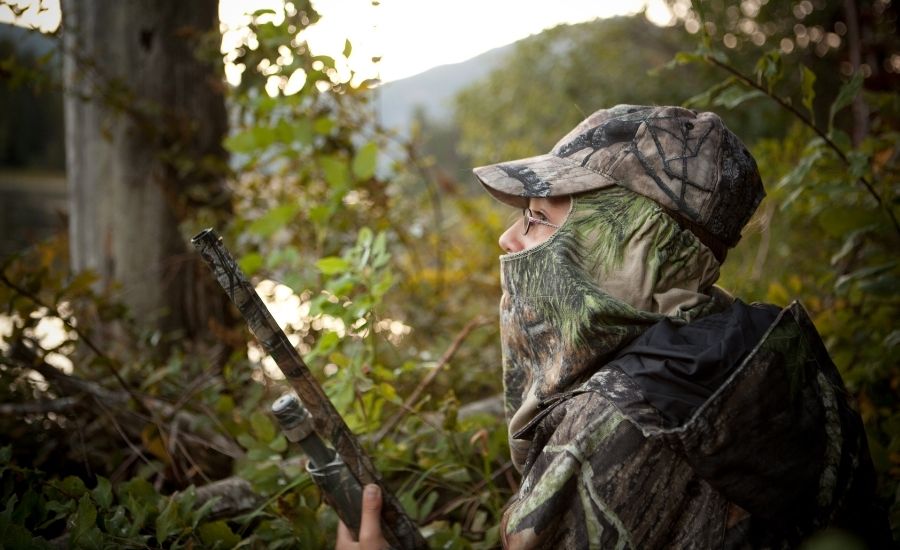
Can I Buy Hunting Land in Southwest Colorado?

Can I Buy Hunting Land in Southwest Colorado?

Hunting Properties for Sale in Southwest Colorado: What to Look For

Buying hunting land in Southwest Colorado is a different process than buying a regular piece of rural property. A lot of buyers come out looking at acreage and immediately focus on views, cabin potential, or how remote the property feels. Then hunting season rolls around, and they realize the elk are crossing two ridges over instead. Good hunting property is about movement, access, habitat, pressure, water, and neighboring land patterns. Sometimes the best hunting parcel is not the prettiest one. That surprises people.

In places like Montezuma County and the surrounding parts of Southwest Colorado, buyers are paying much closer attention to usability now, especially with larger recreational tracts becoming harder to find and more expensive every year.

In this article, we will take a closer look at hunting properties for sale in Southwest Colorado that not only benefit the lifestyle, but also make it doable.

Wildlife Movement Matters More Than Raw Acreage

Bigger is not automatically better. There are smaller parcels in Southwest Colorado that consistently hold elk, deer, and turkey because they sit directly along natural travel corridors. Then there are huge properties with very little wildlife activity because the terrain, pressure, or vegetation does not support regular movement. That is why experienced buyers spend time studying the terrain before they ever schedule a showing.

Ridgelines, bedding areas, north-facing timber, water access, and migration routes tell a much bigger story than acreage alone. Colorado elk hunting land for sale gets a lot more valuable when it borders timber, sits near feeding areas, or connects naturally with larger stretches of habitat. Animals do not care where property lines are. And honestly, some properties look incredible in listing photos, but hunt terribly because there is too much human activity nearby. ATVs, neighboring cabins, heavy road traffic, or constant recreation pressure can change wildlife patterns fast.

Can I Buy Hunting Land in Southwest Colorado

BLM Adjacent Land Changes the Equation

BLM adjacent land in Colorado tends to draw strong interest for a reason. Private land that borders public ground can dramatically expand hunting opportunities without requiring buyers to purchase massive acreage themselves. It creates room to move, scout, and access larger wildlife corridors that might otherwise be unavailable. For many buyers, that combination hits the sweet spot. You get the privacy and control of private ownership while still benefiting from nearby public access.

That said, not all BLM access works the same way. Some parcels technically border public land, but have terrain so steep or rugged that the usable hunting area becomes limited. Others may attract heavy seasonal pressure from nearby hunters accessing the same public sections. Access points, terrain transitions, and neighboring parcel layouts matter a lot more than people think. A property map can look fantastic online. Walking it in person tells the real story.


"The hunting properties getting the strongest attention right now are the ones that combine recreation, privacy, and long-term usability. Buyers want land they can enjoy during hunting season but also use year-round with good access, strong wildlife movement, and realistic improvement potential. The properties near public land or established migration corridors tend to move quickly." –Bill Stanley, Broker/Owner 


Water Sources Can Make or Break a Hunting Property

Wildlife follows water, especially in the drier parts of Southwest Colorado. Seasonal creeks, ponds, springs, stock tanks, and year-round water sources can heavily influence animal traffic across a property. Land without reliable water nearby often sees less consistent movement during warmer months. Even small water features can change how a property looks. A tucked-away spring near timber cover may hold more wildlife activity than a wide-open meadow with no nearby water source at all.

Buyers looking at hunting land in Montezuma County usually pay close attention to this because conditions can vary dramatically from one area to another. And there is another side to this conversation that people sometimes overlook. Water access also affects the long-term usefulness of the property itself, especially for cabin builds, livestock potential, or future land improvements.

Year-Round Access Is a Bigger Deal Than Most Buyers Expect

Remote sounds great until snowfall hits. Some hunting properties in Southwest Colorado become difficult to reach during parts of the winter, particularly at higher elevations. Seasonal roads, easements, maintenance agreements, and terrain conditions all matter. That does not mean buyers should avoid remote properties; some people specifically want that level of isolation. But it is smart to understand exactly what access looks like during different seasons before buying.

A beautiful mountain parcel loses some appeal if you cannot realistically get equipment, trailers, or supplies onto the property when you need them. Road quality matters more than people think, too. Long, rough access roads can impact everything from maintenance costs to how often owners actually use the land.

Cabin Potential and Build Sites are Drawing More Attention

More buyers are searching for hunting land they can grow into over time. Sometimes that means adding a seasonal cabin. Other times it means building a long-term mountain retreat later down the road. Either way, usable build areas are becoming a larger part of the conversation.

Flat ground, solar exposure, septic feasibility, utility access, snow load considerations, and wind exposure are all details that start becoming very real once somebody moves past the dream phase and starts planning improvements. Not every hunting parcel is ideal for future development. Steep terrain, difficult access, or lack of infrastructure can complicate things quickly.

Southwest Colorado Buyers Are Thinking Long-Term Now

A lot of hunting land buyers today are not just shopping for hunting season. They are thinking about future retirement plans, family retreats, recreational flexibility, and long-term land ownership. That changes what people prioritize. Properties with strong hunting potential, reasonable access, nearby public land, and flexible future use tend to hold stronger long-term appeal than highly specialized parcels that only work for one purpose. And in Southwest Colorado, that balance matters, as buyers still want rugged country and privacy and land that stays enjoyable and practical long after the excitement of closing day wears off.

If you are interested in making the move to South Colorado's many stunning hunting properties, reach out to the professionals at United Country Real Estate to guide you in finding and settling down in the home of your dreams today.

Frequently Asked Questions About Hunting Properties in Southwest Colorado

What should I look for when buying hunting land in Southwest Colorado?

When buying hunting land in Southwest Colorado, look beyond acreage and views. The most important factors are wildlife movement, access, water sources, habitat, pressure from nearby roads or cabins, and how the property connects to surrounding land. A smaller parcel near migration routes, timber, bedding areas, or public land may hunt better than a larger property with poor wildlife activity.

Is bigger acreage always better for hunting property?

No. Bigger acreage is not always better for hunting property. Some smaller parcels consistently attract elk, deer, turkey, and other wildlife because they sit along natural travel corridors or near food, water, and cover. A large property can still hunt poorly if the terrain, vegetation, road traffic, or nearby human activity disrupts wildlife movement.

Why is BLM-adjacent land valuable in Colorado?

BLM-adjacent land in Colorado is valuable because it can expand hunting and recreation opportunities without requiring the buyer to purchase a massive private parcel. Land bordering public ground may provide access to larger wildlife corridors, scouting areas, and hunting terrain. However, buyers should still review terrain, legal access, seasonal hunting pressure, and how usable the adjoining public land really is.

How important is water when buying hunting land?

Water can be one of the most important features of a hunting property. Seasonal creeks, ponds, springs, stock tanks, and year-round water sources can influence where wildlife travels, beds, and feeds. In drier parts of Southwest Colorado, even a small water source near cover can make a property more attractive to elk, deer, and turkey.

Can I build a cabin on hunting land in Southwest Colorado?

Possibly, but it depends on the property. Buyers should look at zoning, access, buildable land, septic feasibility, water availability, utility access, solar exposure, road conditions, and seasonal weather. Some hunting parcels are excellent for future cabins or retreats, while others may be too steep, remote, or difficult to improve affordably.

Why does year-round access matter for hunting properties?

Year-round access matters because some remote hunting properties become difficult or impossible to reach during winter or muddy seasons. Buyers should review road maintenance, easements, snow conditions, driveway grades, and whether they can realistically bring in trailers, supplies, equipment, or building materials. A great hunting property can become frustrating if access is unreliable.

What makes a good elk hunting property in Southwest Colorado?

A good elk hunting property usually has a mix of cover, water, feeding areas, bedding areas, and natural travel routes. Properties near timber, ridgelines, migration corridors, public land, or lower-pressure areas often perform better. Elk do not follow property lines, so buyers should study the surrounding landscape, not just the parcel itself.

Should I walk the property before buying hunting land?

Yes. Online maps and listing photos can help, but walking the property is one of the best ways to understand terrain, access, wildlife sign, pressure, water, and usability. A property may look ideal on a map but be too steep, too exposed, too noisy, or too difficult to access once you see it in person.

May 18, 2026

What Are the Best RV Campgrounds Near Mesa Verde National Park in 2026?

What Are the Best RV Campgrounds Near Mesa Verde National Park in 2026

Best RV Campgrounds Near Mesa Verde National Park (Updated 2026)

RV travelers heading toward Mesa Verde National Park usually start with the same plan: find a campground close to the park and call it good. Then they get to Southwest Colorado and realize location matters a lot more than they expected. Some RV parks near Mesa Verde put you close to hiking, restaurants, and downtown Mancos. Others give you darker skies, quieter nights, and bigger views of the mountains.

A few are basically parking lots with hookups, while others actually feel like part of the Colorado experience people drove all this way to see. The right campground depends heavily on how you travel. Some RVers want full hookups and easy access to town, while others are perfectly happy sitting outside under the stars with minimal distractions and enough quiet to hear coyotes at night.

Around Mesa Verde, you can genuinely find both. In this article, we will take a closer look at the best RV campgrounds near Mesa Verde National Park.

Why RV Travelers Keep Choosing Mancos

Mancos has quietly become one of the most popular home bases for Mesa Verde visitors who want more than just a quick stop overnight. The town sits close enough to the park for easy day trips while still giving travelers restaurants, coffee shops, breweries, fuel stops, and a small-town Colorado atmosphere that feels authentic instead of overly touristy. There's also something relaxing about Mancos itself. The mountain views feel bigger there, and the pace slows down a little. Many RV travelers come to Mesa Verde and end up spending extra days exploring the surrounding Four Corners region instead.

What Makes a Good Mesa Verde RV Park?

This comes down to what kind of traveler you are. Some people prioritize proximity to Mesa Verde National Park above everything else. Others care more about full RV hookups, pull-through sites, Wi-Fi access, shaded lots, or nearby hiking. And if you're traveling during peak summer season, availability matters almost as much as amenities. Southwest Colorado fills up quickly once the weather warms up, especially near national parks. The best RV campgrounds near Mesa Verde tend to balance convenience with scenery. Nobody drives to this part of Colorado hoping to stare at interstate traffic all evening.

Best RV Campgrounds Near Mesa Verde

Morefield Campground 

Located inside Mesa Verde National Park, Morefield Campground is usually the first place RV travelers look, and for good reason. You're already inside the park boundaries, which makes early morning access much easier during travel months. The campground offers RV sites, amenities nearby, and immediate access to the park experience itself. The tradeoff is that staying inside a national park usually means less privacy and fewer resort-style comforts compared to private RV parks nearby. Still, for travelers prioritizing convenience to cliff dwellings and park exploration, it's hard to beat.

Ancient Cedars Mesa Verde RV Park 

Ancient Cedars Mesa Verde RV Park has become a favorite for RV travelers wanting proximity to both Mesa Verde and downtown Mancos. The atmosphere feels more relaxed than at larger commercial RV resorts, and the surrounding scenery gives travelers the Southwest Colorado experience that people usually picture in their heads before arriving. Full RV hookups make longer stays easier, too, especially for travelers exploring the entire Four Corners region.

Mancos State Park Campground

Mancos State Park Campground attracts RV travelers who care more about scenery and outdoor atmosphere than packed resort-style camping. The campground sits around Jackson Gulch Reservoir and offers a quieter mountain setting compared to busier tourism corridors closer to the park entrance. Fishing, kayaking, hiking, and cooler summer temperatures pull a lot of repeat visitors back year after year. People looking for quieter camping near Mesa Verde usually end up loving this area.

Mesa Verde RV Resort 

Mesa Verde RV Resort appeals to RV travelers wanting larger sites, stronger amenities, and easier long-term stays. Travelers passing through the Four Corners region often appreciate the convenience factor here, especially after several days of rougher campground setups elsewhere. Full hookups, accessible pull-through sites, and proximity to both Mancos and Mesa Verde make it popular for larger RVs and extended road trips.


"A lot of people visit Mesa Verde for the history, but they end up falling in love with the lifestyle around Mancos and Southwest Colorado while they're here. RV travelers especially start realizing how much they enjoy the slower pace, mountain views, and outdoor access compared to busier tourist destinations. It's pretty common for visitors to come through for a camping trip and leave talking about buying property in the Four Corners area someday." –Bill Stanley, Broker/Owner


Need Full RV Hookups?

This matters more around Mesa Verde than some travelers expect. Not every campground near the park offers the same level of RV infrastructure. Larger rigs especially need to pay attention before booking. Travelers searching specifically for RV hookups in the Four Corners region often lean toward private RV parks around Mancos because they offer easier access to sewer hookups, larger sites, laundry facilities, and more reliable utilities overall. And after several days on the road, those small comforts suddenly stop feeling small.

What Else Is There to Do Around Mesa Verde?

There is plenty to do to keep busy around Mesa Verde! That part is what surprises people who assume Mesa Verde is only about the cliff dwellings. The surrounding Four Corners region offers hiking, mountain biking, fly fishing, rafting, scenic drives, and smaller historic towns worth exploring. Travelers staying near Mancos also have relatively easy access to Durango, Dolores, and Telluride day trips, depending on how long they're staying. Points of interest like Canyons of the Ancients National Monument, the San Juan National Forest, and the Durango & Silverton Narrow Gauge Railroad add a huge amount of recreational value to the area. Some RV travelers come planning a two-night stop and end up staying a week once they realize how much there is nearby.

When is The Best Time to Camp Near Mesa Verde?

Late spring through early fall tends to be the busiest season. Summer brings the warmest weather and fullest campgrounds, especially around school vacation months. Fall is quieter and, honestly, one of the best times to visit if travelers want cooler temperatures and fewer crowds. Southwest Colorado weather can shift quickly, though, especially at elevation. Warm afternoons can turn into cold nights fast. Experienced RV travelers around Mesa Verde usually come prepared for both.

Ready to Experience Why RV Travelers Keep Returning to Southwest Colorado?

The area feels adventurous without feeling inaccessible. You get national park scenery, mountain towns, open skies, archaeological history, and outdoor recreation all packed into one region. And unlike some heavily commercialized park destinations, parts of Southwest Colorado still feel quiet enough to slow people down. That's hard to find now. The best RV parks near Mesa Verde don't just give travelers a place to park for the night. They give people a chance to actually experience the Four Corners region the way it's supposed to feel. Trust the real estate professionals at Blue Sky Homes and Land to guide you in finding and settling down in the home of your dreams in the many beautiful, well-maintained neighborhoods in Mancos, CO, today.

May 16, 2026

Homes for Sale in Dolores, Colorado: What Buyers Need to Know in 2026

homes for sale in dolores, co in 2026

Homes for Sale in Dolores, Colorado: What Buyers Need to Know in 2026

Most prospective buyers who end up looking at homes in Dolores, Colorado, have already ruled out the busier spots. They've driven through bigger towns, maybe even looked at Telluride prices, and realized pretty quickly that's not what they're after. Dolores shows up later in the search, usually on purpose. Here's the honest part: buying here isn't hard, but it's different.

Inventory is thin, properties vary more than you'd expect, and what looks like a great deal online can feel completely different once you're standing on the land. That's where most buyers either get comfortable or start second-guessing.

What is Dolore's Location & Why Does This Matter?

Dolores is tucked just west of Cortez, with Telluride sitting out there as the big-name neighbor. Close enough to get there, far enough that residents aren't paying resort pricing every time they turn around. Buyers feel that difference right away, as they are no longer surrounded by constant movement, and there's space between things. Running errands takes a little more planning, sure, but most people here stop noticing that after a while. The trade-off is quiet, not the kind gained in a subdivision at night, but the kind that is noticed during all hours of the day.

What The Market Feels Like Right Now

In 2026, the market in Dolores doesn't behave like a city, as there's no steady stream of listings popping up every week. Buyers might watch a property sit, then something else hits the market, and it's gone faster than expected. That is normal for this area, and it's not always about price alone. It's the land, the access, and the setting, as two homes with similar square footage can feel completely different depending on where they sit. Buyers who do well here tend to stay patient, but not passive. There's a window where buyers need to move, and it doesn't stay open long.

What Kind of Homes Are On The Dolores Market?

Dolores isn't a uniform market, as many prospective buyers aren't touring five versions of the same house with different paint colors. Many buyers will find cabins tucked into treelines, or ranch-style homes sitting on open land, and places that feel a little off-grid, even if they technically aren't. Some homes are updated, and some are not. A few look great in photos and need more work than expected once you're inside. Then there is the land, the part that many transplant buyers underestimate. A few acres can feel manageable, as ten acres change how you think about maintenance, access, and daily routines.

Outdoor Access is the True Selling Point

People don't choose to move to Dolores for the house alone, but also for the things around it. McPhee Reservoir ends up being part of residents' routine faster than expected, whether for fishing, boating, or just heading out there in the evening. It's not a once-a-year thing; it's a regular stop. San Juan National Forest is right there, providing trails, back roads, and places you can disappear for a few hours without planning a whole trip. This access changes how people spend their time, especially once they settle in. Dolores River runs through the area and adds another layer to it. Some buyers don't consider Dolores much at first, but it becomes their go-to spot when they want to step away for a bit. Even the small things matter. Downtown Dolores isn't trying to be something it's not. A few local spots, a slower pace, and just enough going on to keep it from feeling empty.

What Gets Buyers After Making the Move?

Living in Dolores isn't the same as visiting for a weekend. The Internet can vary depending on the property, and roads can feel different in the winter than they did during the showing. A house that feels private in the summer might feel more remote in January. None of that is hidden; it just hits differently once residents rely on it every day. Buyers who go in expecting that usually adjust without much trouble, though the ones who assume it works like a suburban setup tend to feel it more.

Why Are People Still Buying Here?

Even with the changes over the past few years, Dolores keeps pulling in the same kind of buyer. Those who desire space and who don't require things to be five minutes from their homes. Those who value the setting as much as the house fare well here. It works for remote workers, as well as second-home buyers, and those who want a more tranquil lifestyle without completely disconnecting from the rest of the region. There's a reason inventory stays tight, as people who land here don't rush to leave.


"You aren't only buying a home here, but you are buying into how the area functions. If you need everything close and predictable, it might feel like a stretch. If you're comfortable trading some convenience for space and access to the outdoors, it tends to make sense pretty quickly. Most buyers know which side they fall on after a second visit, as the first trip is usually based on curiosity and the second is widely the deciding factor."  –Bill Stanley/Broker Owner 


So, Is Dolores the Right Move?

For the right buyer, it clicks. Not instantly, but once it does, it sticks. Buyers start thinking less about square footage and more about where the property sits. They begin noticing how quiet it is in the middle of the day, and that they aren't simply buying into a fast-moving market, but buying into a place that stays pretty consistent. And for a lot of people, that's the whole point. Trust the real estate professionals at United Country Real Estate to guide you in finding and settling down in the home of your dreams in the many beautiful, eclectic homes that make up the scenic, rugged community of Dolores, Colorado, today.

Posted in Buyer Tips
May 11, 2026

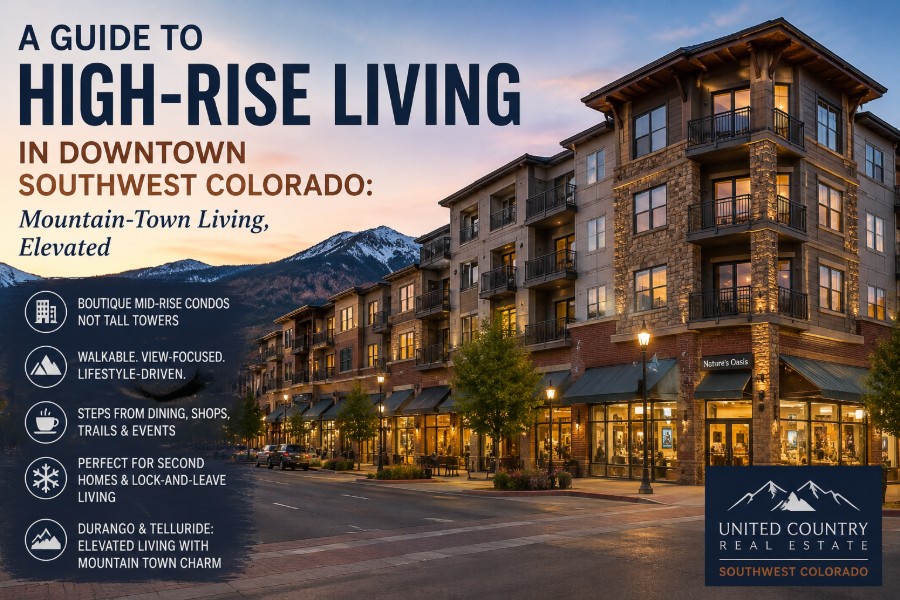
High-Rise Living in Southwest Colorado?

A Guide to High-Rise Living in Downtown Southwest Colorado: Mountain-Town Living, Elevated

A Guide to High-Rise Living in Downtown Southwest Colorado: Mountain-Town Living, Elevated

When you hear the words "high-rise living," you might picture towering glass buildings and big-city skylines. In Southwest Colorado, this is not the case; in fact, the charming "highrises" take the form of boutique mid-rise condos, downtown lofts, and mixed-use buildings that keep residents close to restaurants, trails, events, and the everyday pulse of mountain-town living.

In more specific downtown places such as Durango and Telluride, the height of buildings is shaped primarily by local zoning and preservation goals, resulting in walkable, view-focused living that prioritizes character over vertical scale, leaving a downtown that is elevated without presenting as an overwhelming landscape.

What Does "High-Rise" Living Really Look Like in Southwest Colorado?

In Southwest Colorado, high-rise living looks like three- to five-story buildings with residential units located above street-level boutique shops or professional offices. Downtown condos and lofts are designed for high walkability and low maintenance. For more traditional lock-and-leave living, second-home owners and frequent travelers tend to lean toward this option. Mountain towns intentionally limit building heights to help preserve sightlines and the scale of neighborhoods. Instead of tall towers, prospective buyers are met with thoughtfully designed buildings that blend into their surroundings while still offering convenient access to downtown areas.

Where is Downtown Vertical Living Most Popular in Southwest Colorado?

1. Downtown Durango: Loft-Style Living at the Center of the Town

Durango is home to one of the strongest downtown condo and loft markets in Southwest Colorado, with an active downtown core that supports mixed-use buildings where residents are steps from dining, coffee shops, galleries, and community events. Better examples of downtown living include multi-story, mixed-use buildings with residential condos above retail, private balconies or rooftop decks, and easy access to urban amenities and outdoor recreation.

Prospective buyers of downtown Durango condos and lofts choose the area for its easy access to urban amenities, its quick connections to outdoor recreational destinations with trails, and its balanced mix of full-time residents and second-home owners.

2. Telluride Town Core: Luxury Boutique Living with Height-Conscious Design

Telluride offers a different but equally compelling version of downtown condo living. With strict building height standards, the town's historic charm and mountain views are preserved, resulting directly in high-design, village-scale condo buildings rather than tall towers. Luxury condos in Telluride focus on location, finishes, and views, often placing residents in direct walking distance of ski lifts, dining, festivals, and trailheads. Buildings here are designed for ease of ownership, making them more attractive to second-home buyers and lifestyle-driven transplants.

Downtown Telluride living stands out for its exceptional walkability in a world-class mountain destination, with a strong emphasis on quality building design rather than the height of the structure, and a true "park the car and forget it" lifestyle.

What Do Prospective Buyers Gain By Choosing Downtown Condo Living in Mountain Towns?

Southwest Colorado provides dramatic mountain scenery, replacing the need for towering buildings. Top-floor units, corner layouts, and rooftop terraces often provide sweeping views thanks to surrounding peaks and open sightlines. Smart buyers will look at upper-level or corner units for premium privacy, balcony orientation, and winter sun exposure, as well as options for shared or private rooftop spaces.

Tips for Buyers: Instead of sprawling resort amenities, prospective buyers can prioritize features that support mountain living, including secure building access, covered or heated parking, storage for skis, bikes, and outdoor gear, and sound insulation for active downtown areas.

"Downtown condo living in Southwest Colorado is about efficiency and lifestyle, not building height. Buyers who focus on HOA health, parking, and storage are usually the happiest in the long term. I always suggest touring the unit at different times of day because light, noise, and winter conditions can completely change the feel." –Bill Stanley, Broker/Owner

Is Downtown High-Rise Living in Southwest Colorado Right for You?

If your ideal home puts you steps from restaurants, events, and outdoor adventure, all without having to deal with the upkeep of a single-family home. Downtown condo living in Southwest Colorado can be an ideal fit; while buildings here are typically mid-rise rather than tall, the lifestyle feels elevated thanks to walkability, views, and strong community energy.

For buyers who value character, convenience, and mountain authenticity, downtown living in Southwest Colorado delivers a uniquely rewarding experience one floor at a time. Trust the real estate professionals at United Country Real Estate to guide you in finding and settling down in the home of your dreams in the many scenic, mountainous Southwest Colorado communities today.